
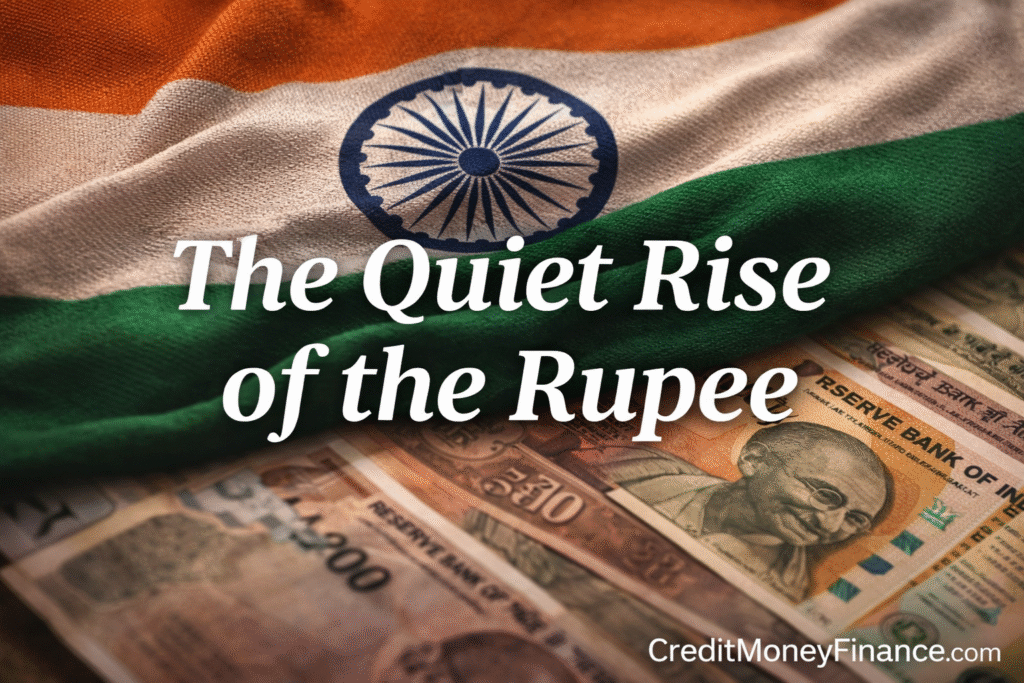
The Quiet Rise of the Rupee in a Changing World.
How INR Is Quietly Emerging as a Trusted Global Trade Currency.
Discover why 22 countries are settling trade in Indian Rupees. Learn how India’s economic stability, rising exports, and financial credibility are positioning the INR as a strong global trade currency.
In global finance, revolutions are often loud. But occasionally, the most consequential shifts occur quietly, without spectacle or slogans.
The growing acceptance of the Indian Rupee for international trade, now by 22 countries is one such development.
At first glance, the number may appear modest. In reality, it signals a deeper transformation in how the world perceives India’s economy, its institutions, and its long-term stability..
From Compulsion to Confidence.
The move towards rupee-based trade settlements initially emerged during a period of global disruption. Supply chain breakdowns, sanctions, and volatile capital flows forced countries to seek alternatives to traditional dollar-dominated payment systems. India, with its large market and relatively stable financial framework, offered a practical solution.
What is notable is that these arrangements have not been rolled back as global conditions stabilised. Instead, they have expanded. This shift from compulsion to choice underscores a crucial point: the rupee is being accepted not out of necessity, but out of confidence.
Credibility Over Convertibility.
Unlike reserve currencies that dominate through scale or military-economic power, the Indian Rupee’s growing role rests on credibility. India has not rushed into full capital account convertibility, nor has it sought to artificially boost the rupee’s value. Instead, it has focused on macroeconomic discipline, regulatory clarity, and institutional stability.
This cautious approach has paid dividends. Trading partners see value in a currency backed by a large domestic economy, predictable monetary policy, and a central bank that prioritises stability over spectacle.
A Practical Currency for a Multipolar World.
For many of the countries settling trade in rupees, the logic is straightforward. India is a major buyer of energy, fertilisers, defence equipment, and raw materials and a significant exporter of pharmaceuticals, food products, engineering goods, and services. Settling trade in INR reduces transaction costs, lowers dependence on third-party currencies, and enables smoother bilateral trade cycles.
In an increasingly multipolar world, such pragmatic arrangements are becoming more common. De-dollarisation, often overstated in rhetoric, is in practice a process of diversification. The rupee’s growing role fits squarely within this global trend.
Strategic Gains for India.
The implications for India are substantial. Rupee trade settlements reduce foreign exchange outflows, insulate the economy from external shocks, and strengthen India’s negotiating position in international trade. More importantly, they signal trust in India’s financial system an asset far more valuable than short-term currency appreciation.
This development also reflects the success of India’s economic diplomacy. Without coercion or grandstanding, India has positioned the rupee as a viable settlement option, particularly for emerging and developing economies seeking stability without overexposure.
Also Read: IN-SPACe and SIDBI Launch ₹1,000 Crore Space Venture Capital Fund to Boost India’s Space Startups
A Measured Path Forward.
The internationalisation of the rupee must remain gradual and disciplined. Overreach could invite volatility; haste could undermine hard-earned credibility. The Reserve Bank of India’s calibrated approach allowing the rupee to expand its role organically, remains the right course.
What matters is not how fast the rupee travels, but how securely it is received.
Conclusion.
That 22 nations now settle trade in Indian Rupees is not merely a statistic, it is a statement. It reflects a world that increasingly views India as a stable economic partner and the rupee as a reliable instrument of exchange.
In an era defined by uncertainty and fragmentation, trust has become the rarest currency of all. The quiet rise of the rupee suggests that India, through patience and prudence, has begun to earn it.
Team: CreditMoneyFinance.com
More Featured Articles:
Infrastructure Finance in India: Concept, Evolution, Key Players, and the Road Ahead.
Startup Funding Reset: Why Venture Debt Is Powering India’s Next Growth Wave
Family Office Investments in India: Fueling Startups, Scaleups & Growth-Stage Enterprises
Expert Guidance on Compliance for Private Limited Companies and LLP in India
Hyderabad Angel Fund Launches Rs 100 Crore Fund to Support High-Potential Startups in India